
Subscribe to read full article
This section is for paid subscribers only. Our subscription is only $37/- for one full year.
You get unlimited access to all paid section and features on the website with this subscription.
Not ready for a full subscription?
You can access this article for $2, and have it saved to your account for one year.
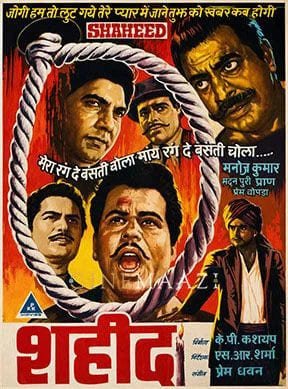
A MAN fights for freedom and eventually finds it (and himself) in prison and on the scaffold. That is the theme of "Shaheed."
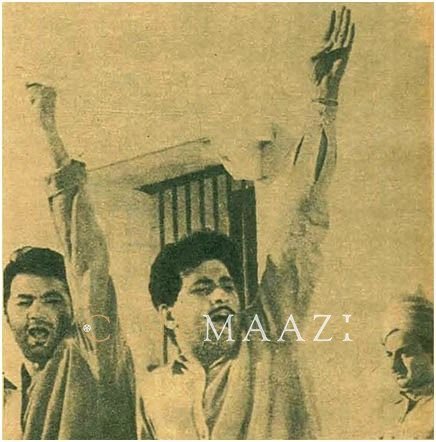
Bhagat Singh's early life is eventful but almost futile. He does little beyond murdering a police officer and throwing a bomb in the Assembly. Thrown in prison with fellow revolutionaries, he faces starvation and flogging with fortitude, leads a mass hunger strike lasting over 40 days, refuses to attend a rigged court trial and goes to the gallows with a shrug of contempt.
Resisting the temptation to idealise events and characters, "Shaheed" has heightened the impact of its message with a down-to-earth script, a finely austere atmosphere: half the film takes place in prison—no small achievement. There is also a feeling for period, refreshing lack of romance, effective use of subdued lights and shadows, occasional snatches of song without accompaniment to highlight the reality.
The only false note in the austere mood is an excess of songs—the film's sole concession to the box office, though they add nothing to popular appeal.
Other weak spots are the scenes showing Shaheed's boyhood, the child acting like a miniature adult and lisping some horribly inane lines. Then too the few Britons are hateful caricatures drawn without restraint. With events such a long way off. it should have been possible to take a more objective look at things.
Otherwise the direction is good—even the fasting sequence does not pall despite excessive length and the fact that the men look no thinner on the last day than on the first. The slow shots, the haggard looks, the dark cells combine to build a picture of growing despair.
Earlier there is the interlude where the assassins plan to kill an officer: When he doesn't appear, they shoot his lieutenant. It's hardly the sort of thing to arouse sympathy for the killers, yet there is no false attempt to justify it—one of the things that have given the film a ring of truth.
Much of the film is seen through the mother's eyes and Kamini Kaushal portrays the role with quiet sincerity: her simple words getting to the heart where tears would have been a bore. Manoj plays the title role without false glorification or posturing. Bhagat Singh emerges as a lovable human being no less than a hero—a vital, understanding portrayal.
Prem Chopra is good and the support credible but it is Pran who dominates the latter part of the film from his whirlwind entry as the berserk convict through the tragi-comic transformation and his final scene when he says goodbye to the condemned man-brilliant all the way.
There is intelligent use of editing like the close shot of the chapati slowly dissolving into the next scene or the expressive series of stills of prisoners' faces when the condemned men are walking to the gallows. Old prints of pre-independence days set the mood of the film in the credit titles.
Sincere, candid look at history and a good film.
| "Shaheed" | Produced by Kewal P. Kashyap |
| Direction | S. Ram Sharma |
| Story | K. P. K . Research Department |
| Screenplay and Dialogue | Din Dayal Sharma |
| Lyrics and Music | Prem Dhawan |
| Cinematography | Ranjodh Thakur |
| Audiography | Pushalkar and Mohan |
| Art Direction | Sant Singh |
| Editing | Vishnu Singh and B. S. Glad |
| Cast | Manoj Kumar, Nirupa Roy, Kamini Kaushal, Sareeta. Prem Chopra, Man Mohan, Sailesah Kumar, Anant Kumar, Sudhir, Jagdev, Sapru, Karan Dewan, Chaman Puri, Indrani Mukherji, Raja, Krishan Dhawan, Madan Puri, Iftikar, Asit Sen and Pran |
Rating: ***
This article was published in 'Filmfare' magazine's 10 June 1966 edition.
About the Author