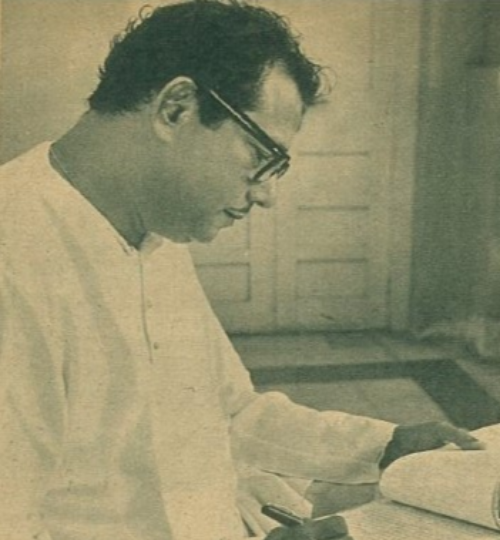



Social Realism in Indian Cinema by K. A. Abbas

The tradition of social realism in cinema is older than escapism, romanticism or the commercialised glamour of the star system. Much before the dream-factories of Hollywood started churning out escapist melodramas, inconsequential comedies, and thrillers dripping with sex-and-violence, social realism had already taken root in the pioneering American cinema.
The very first films of D. W. Griffith were on social themes like unemployment, alcoholism, exploitation of labour, and social injustice. These films, made around 1910, were treated realistically if sentimentally, and were enthusiastically received by the proletarian audience. They saw in the new art form a reflection of their life and its problems.
In India, several years before Dadasaheb Phalke made his first feature film "Raja Harischandra", the novelty of the moving pictures had already been introduced through occasional shows of silent one-reelers. While British cinematograph companies in India were showing such short subjects as "Our Indian Empire", "Great Delhi Durbar", and "Marriage of a Maharaja", the national mood was reflected in such locally-produced topical films as "Great Bengal Partition Movement" (1905), "Tilak's Visit To Calcutta" and "Procession" (1906).
The earliest Indian "mythologicals", aesthetically crude though they might have been, were yet a manifestation of the growing national consciousness. These popular legends, familiar even to the poorest Indian, provided an oblique affirmation of the national identity against the threatened domination of foreign culture.
The cultural renaissance which accompanied the growth of the national awakening was also manifested in the movements for social reform. And under their influence, Indian films came to have a humanistic and reformist content and character.
It is significant that, as the film medium in India progressively became matured, the novels and short stories of Sarat Chandra Chatterjee came to be extremely popular. That is because the timeliness of his themes and the straightforward approach of his literary style were ideal ingredients for cinematic representation by such directors as Debaki Bose, Barua, and Nitin Bose. On the West Coast, too, films of social significance were made by directors like Shantaram, Vinayak, Baburao Pendharkar, Mohan Bhavnani and Mehboob Khan.
Sometimes crudely, and sometimes artistically, but almost always effectively, the better type of Indian films depicted contemporary social reality and discussed a multitude of vital themes: caste and untouchability ("Achhut Kanya", "Achhut"), frustration in love and forced marriages ("Devdas", "Aadmi"), the plight of widows and their human right to love (''Badi Didi"), the inequities of landlordism and usury ("Savkari Pash", "Chhaya", "Dharti Mata"), the exploitation of the industrial workers ("Mill", "Mazdoor"), greed and economic disparities ("Roti"), the status of the new woman and her revolt ("Duniya Na Mane"), ideals of national unity ("Ram Rahim", ''Padosi") .
The grain of social truth was, indeed, present even in a considerable number of "popular" Indian films. The more enlightened and social-minded directors were vitally concerned, and involved, with the changing reality of their country and their people. They were "committed" film-makers, though they did not know it. The word "Commitment" had still to acquire its present special meaning.
It was against this background that I recall my own entry, more than a quarter century ago, into the ''forbidden" realms of film direction and production.
Human destiny in its social setting was already my special preoccupation - call it my obsession. When I undertook to direct and produce "Dharti Ke Lal" for the Indian People's Theatre Association, I did not look upon my assignment as a commercial undertaking, not even as an artistic experiment. I took it, rather, as a social duty to use the film medium to communicate the horror and the heroism which were ·both very much in evidence during the Bengal famine.
We were not launching a "new wave"—actually we thought we were fighting against the meaningless musicals, conservatively-oriented family melodramas, and inconsequential comedies like ''Khazanchi", "Khandan", "Khidki" and "Shinshinaki Booblaboo", (This "new wave", brought about by war-time craze, for quick profits and easy money, bas left behind· the legacy of the star-system. But that is a deliberate digression). Actually we were striving to take the Indian cinema back to the tradition of purposeful and creatively dynamic films of social commitment like "Devdas" (1935), "Aadmi" (1939), "Padosi” (1941) and "Roti" (1942) !
''Dharti Ke Lal" (1946) was seen and appreciated at Cinematheque Francais, the celebrated "Film Library" of Paris. The famous French film historian, Georges Sadoul, saw it and mentioned it in his book on World Cinema as one of the most significant films of all times; it received enthusiastic reviews from the world press assembled for the Simla Conference. The special correspondent of "New York Times" -regarded it as "a significant forward step in Indian cinema… which reminded me of Eisenstein at his best". It was the first Indian film acquired for distribution by the Soviet Union, and opened a new market. But it failed lamentably at the box-office"— at least partly due to the grim historical accident of communal riots breaking out, and curfew being enforced, in Bombay on the same day that it was premiered.
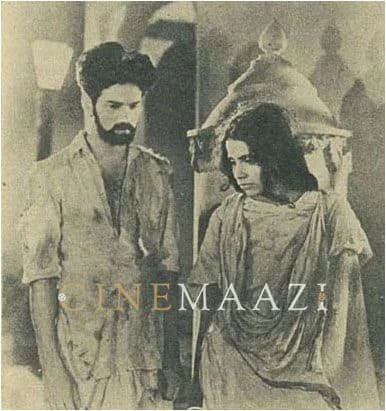
I often wonder at the consequences if these two films had succeeded at the box-office. Even "Humrahi", the Hindi remake by Bimal Roy of bis own beautiful and meaningful Bengali hit "Udayer Pathey", failed to stem the tide of musical glossies in Hindi cinema! Those were the days prior to Awards or incentives and much before the Film Finance Corporation had come to the aid of the poor film-maker. And so it took me (and my Associate Producer V. P. Sathe) five years to earn and pay off the debts incurred for "Dharti Ke Lal" and be able to think of making films again.
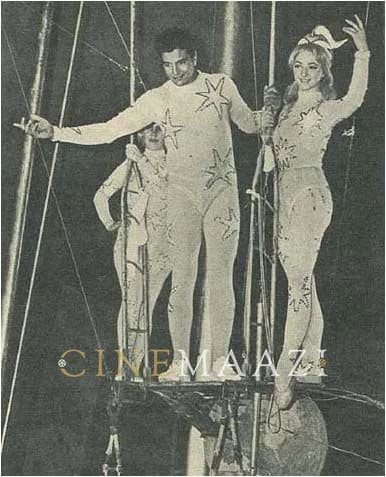
During these years, however, social realism had taken a backseat. The post-Independence era was a time· of disillusionment, and escapism was the order of the day in the film world. The star system had come to stay, and everyone was supposed to accommodate it, even if he did not compromise with the escapist themes. A few producers were willing to risk a socially progressive story if it could be wrapped up in songs and sentiments"— as Raj Kapoor so successfully did with my script of "Awara".
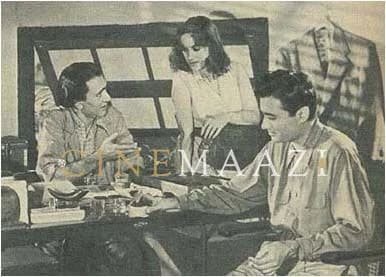
It was in this atmosphere that I started, my second film. "Anhonee" was my idea of a balanced compromise"— two stars (Nargis and Raj Kapoor) who were also consummate artistes, a few songs, but basically a progressive social theme.
In "Rahi" (Dev Anand and Nalini Jaywant — 1952) I was closer to the earth — the poignant tale of the plantation workers’ exploitation in the British-owned tea gardens of Assam. It had to be shot in the even more picturesque Nilgiris in an Indian tea garden, as the British managers would not let me or my cameras anywhere near the estates.
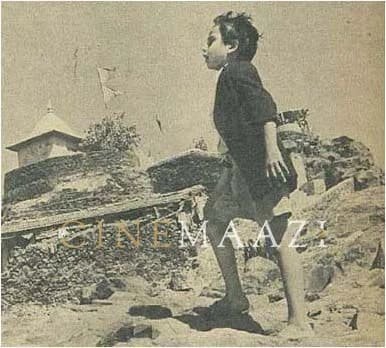
But the film which gave me the maximum creative satisfaction was "Munna." The film was rooted in the life of Bombay and, through the eyes of a lost child, presented a cross-section of our three-tier society. The film had no big stars, no songs, and yet proved reasonably popular. It was described by a London paper as "the worthiest and liveliest film of the Edinburgh Film Festival", and it had the honour of sharing an India Week in London, at the National Theatre of the British Film Institute, with Satyajit Ray's initial masterpiece, "Pather Panchali."
I do believe in variety—let there be art films, experimental films, musicals, comedies, thrillers, and even farces. But so far as I am concerned, I am committed to themes of human destiny in its changing social setting. I have tried it again and again, in different artistic and technical formats, films with and without songs, films with and without stars, films in colour and widescreen, but my commitment, remained unaltered.
Some of my films like "Shehar Aur Sapna" (a President's Gold Medal winner) have attracted critical as well as popular attention, while others are remembered as box-office failures. Some say I am mulish in trying out themes of social realism, without compromise. "Give the people what they want," they advise. But I believe in doing what satisfies not only my personal ego but my social conscience. I have no martyr complex. I have enjoyed making each one of my films.
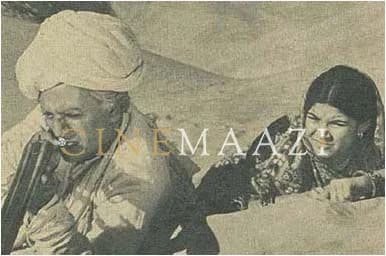
From "Dharti Ke Lal" to "Do Boond Pani"—the cycle is complete—I have made exactly a dozen films—and I have come back to rural India for my locale and my inspiration. In place of the lush greenery of Bengal, there is the arid desert of Rajasthan. The Great Famine has become the eternal struggle for water. But the times have changed, and so has the Indian peasant. Discarding his wooden plough, he has started using tractors and bulldozers, cranes and combines, He is blasting through sand and rocks to build not only a canal but a new future for himself, for his country, and his people.
It is a privilege for the Indian cinema to be the chronicler of this great and historic, dramatic and exciting, transformation. Social realism need no longer be the sad old tale of defeat and despair.
This article was published in 'Filmfare' magazine's 2 June 1972 edition.
The images and captions are from the original article.
About the Author