
Subscribe to read full article
This section is for paid subscribers only. Our subscription is only $37/- for one full year.
You get unlimited access to all paid section and features on the website with this subscription.
Not ready for a full subscription?
You can access this article for $2, and have it saved to your account for one year.
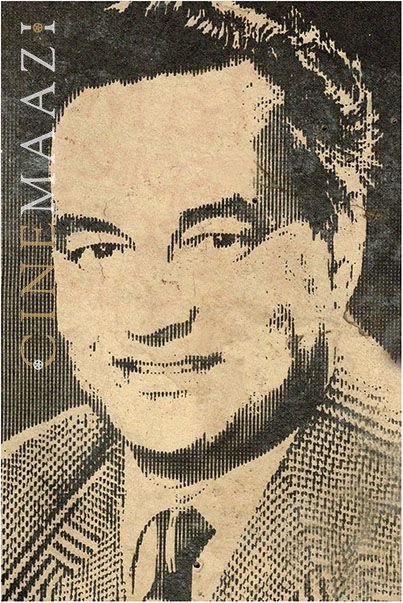
The voice loved by all, that bequeathed meaning to the dual experiences of ecstasy and agony through songs like Tu kahe agar jeewan bhar main geet sunata jaun, Zindagi khwab hain, Mera joota hai Japanee, Chhalia mera naam, was silenced by Time on the 27th of August, 1976. Mohammed Rafi remarked, ''Our country has lost a singer of the calibre which Time produces but once."
What was it that made Mukesh the heart-throb of millions? His voice was never harnessed in classical fashion like that of Manna Dey who has an edge over the others with his classical grooming. Mukesh was not endowed, with the 'beyond-the-mountains' reach and pitch of Rafi's voice, nor had he Rafi's virtuosity in singing any type of song.
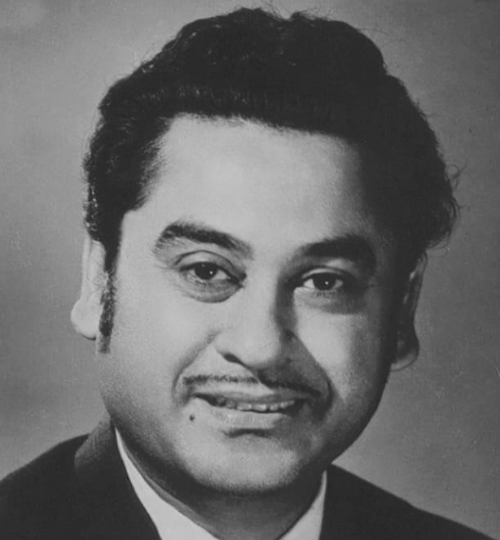
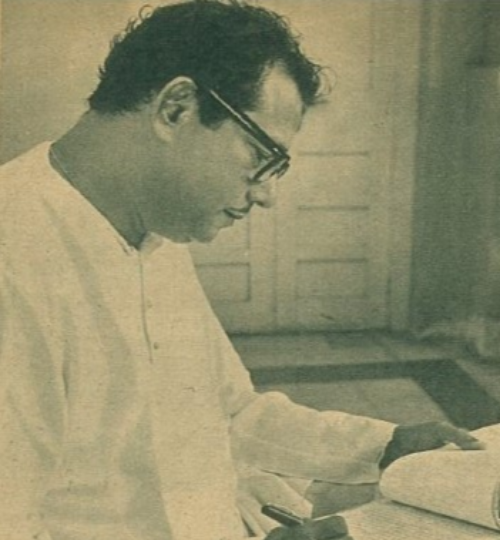
Mukesh did not possess the piquant, velvet vibrations that characterise Talat Mahmood, the uncrowned king of 'ghazals.' Again, his voice was not husky and sepulchral like Hemant Kumar's. Mukesh did not have the bantering and flippant style of Kishore Kumar
Composer C Ramachandra [sic] once said that Mukesh sang 'besur' (out of tune). The remark is hardly fair. There was the time Sardar Malik was rehearsing Mukesh for a song, Saranga teri yaadmein, Nain huve bechain at the Mehboob Studios, two decades ago. The 'murki' or subtle short 'harkat' as Malikji wanted at two particular places in the song was eluding Mukesh for a long time. The singer became uneasy as the evening shadows advanced and the song could not be recorded. At last, happily, Mukesh sang it the way Malikji wanted it. Today the tune still haunts music lovers. If taking-more time than unusual for a particular portion was misconstrued as being 'besur,' then the remark is ill-founded.
If Mukesh was a great singer, he was greater as a man Kisiki muskurahaton pe ho nisar; Kisika dard mil sake to le udhar; Kisike waste to tere dil mein pyar; Jeena isika naam hein. That was his own philosophy. A quote hung prominently in his drawing room gives us an insight into the man; it reads "If you ever find a man without a smile, give him your own". Throughout his life, Mukesh lived up to the saying.
Mukesh completed only days before he left on his concert tour abroad from where he was never to return, the last of the eight long playing records on "Tulsi Ramayana." It was to be his last marathon performance for posterity. While on the tour, Mukesh was reported to have expressed his preparedness to face death; one wonders whether he had a premonition.
Teri duniya mein dil lagta nahin wapas bula le;
Mein sajade mein gira hun, mujhko ei malik utha le.
Mukesh will be remembered as long as there is love, good-will and compassion in our hearts. His songs, profoundly emotional in character, carry undertones of these qualities. We, the new generation of singers, will have paid him our honest homage if we can successfully emulate him as a man instead of attempting to imitate him as a singer.
This article was published in 'Filmfare' magazine's 1-15 September 1978 edition.
About the Author