

Odessa Collective: The People's Film Movement in Kerala, India
Odessa Collective emerged in Kerala in 1984 under filmmaker John Abraham's leadership, alongside a group of cinephiles and collaborators, at a time when many local film societies had become inactive because they struggled to secure theatres and raise funds for screenings. Against a backdrop of declining political and cultural movements, the collective sought to challenge the commercial structures governing film production, financing and distribution by developing a cinema rooted in public participation, collective effort and direct engagement with audiences. In this context, Odessa Collective represented a radical experiment.
Following the French New Wave and Italian Neorealism, which challenged the conventions of the Hollywood studio system, several film movements emerged around the world, drawing inspiration from these earlier movements and advocating alternatives to Hollywood and mainstream cinematic conventions. The Indian New Wave (1960s–1980s), Imperfect Cinema (Cuba, 1960s–1970s), Third Cinema (Latin America, late 1960s–1970s), Cinema Novo (Brazil, 1950s–early 1970s), Japanese New Wave (1960s–1980s), Iranian New Wave (1960s–1970s), the L.A. Rebellion (late 1960s–1980s), and Dogme 95 (Denmark, founded in 1995) are notable examples of such movements in cinema history. Although these movements emerged in distinct political and cultural contexts, many shared a rejection of purely commercial filmmaking and a desire to make cinema more socially relevant, politically engaged, and accessible.
The Odessa Collective was perhaps closest to the Third Cinema movement of Latin America in its ideological radicalism. In their manifesto Towards a Third Cinema (1969), Argentine filmmakers Fernando Solanas and Octavio Getino argued that cinema should serve as a tool for political resistance, social change, and liberation from imperialism, colonialism, and capitalism. They advocated a revolutionary form of cinema that would move beyond Hollywood’s commercial model (First Cinema) and the auteur-driven European cinema tradition (Second Cinema). This Third Cinema would be collectively created, represent oppressed communities, and challenge dominant power structures. It also advocated low-cost, independent, and politically committed filmmaking, alternative distribution networks, and screenings designed to encourage audience debate and participation in broader social movements.
Although alternative models of film financing were not new to Indian cinema, several initiatives demonstrated the potential of collective and non-commercial funding. Adoor Gopalakrishnan, who helped establish Kerala’s first film society, Chitralekha Film Society, in 1965, introduced New Wave cinema to Malayalam cinema with his debut feature, Swayamvaram (1972). The Gujarat Co-operative Milk Marketing Federation Ltd. financed Shyam Benegal’s Manthan (1976), while the Yukt Film Collective supported Mani Kaul and K. Hariharan’s Ghashiram Kotwal (1976) and Saeed Mirza’s debut feature, Arvind Desai Ki Ajeeb Dastaan (1978). Another such significant initiative was the Yugantar Film Collective, a feminist filmmaking collective that focused on grassroots documentary production and was active between 1980 and 1983 under the leadership of Deepa Dhanraj.
Odessa collective emerged from discussions among film enthusiasts and activists at Farook College in Kozhikode, where John’s commitment to social engagement inspired the group to move beyond film screenings and take up filmmaking. Initially conceived as a cooperative, Odessa eventually abandoned this plan to preserve its independence and pursued a grassroots approach. The collective operated around four areas: exhibition, distribution, production and the study of cinema. It began by screening films such as Charlie Chaplin’s The Kid (1921), Peruvazhiyambalam (P. Padmarajan, 1979), and Agraharathil Kazhuthai (John Abraham, 1977) in schools and public spaces, and eventually purchased its own 16 mm projector. These screenings expanded across several districts of Kerala, bringing intellectually challenging cinema to local masses beyond conventional theatres.
One of Odessa’s most distinctive characteristics, setting it apart from other film collectives, was its approach to financing. Rather than relying exclusively on commercial producers or state funding, the collective travelled across Kerala, organising public performances and screenings and collecting small monetary contributions. Accounts describe members beating drums, singing songs and performing short plays in villages and at street corners to raise funds for their vision of a people’s cinema. The name Odessa was inspired by the famous Odessa Steps sequence in Sergei Eisenstein’s Battleship Potemkin (1925), reflecting the collective’s commitment to a politically conscious ‘people’s cinema’.
The collective also pioneered organised documentary screenings in Kerala, including Anand Patwardhan’s Bombay Our City (1985), and sought to encourage audiences to engage critically with cinema. Although its proposed study centre remained unrealised during John’s lifetime, Odessa established meaningful connections between alternative cinema and ordinary people.
John Abraham (1937–1987) and the emergence of Odessa
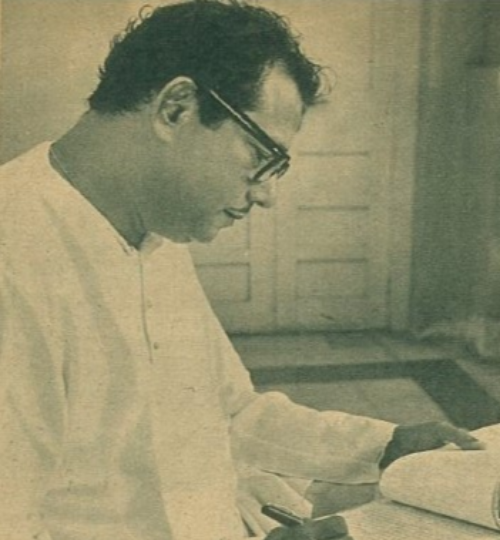
Abraham studied filmmaking at the Film and Television Institute of India (FTII) in Pune, under noted filmmakers such as Ritwik Ghatak and Mani Kaul. He also assisted the latter on Uski Roti (1969). Such training enabled him to experiment with unconventional narrative structures and explore approaches to filmmaking that challenged dominant commercial conventions. His directorial debut was Vidhyarthikale Ithile Ithile (1972). His third feature film, Agraharathil Kazhutai (Donkey in the Brahmin Village, 1977), was controversial upon its release but later attained cult status and became a landmark in the development of the New Wave in South Indian cinema. Throughout his career, Abraham made films that challenged established social norms and cinematic conventions, leaving a lasting mark on avant-garde cinema and expanding the possibilities of cinematic realism.
Although John was the central creative figure, Odessa's philosophy depended on the participation of film enthusiasts, collaborators, local audiences and contributors. In doing so, Odessa and John rewrote the conventions of filmmaking and endeavoured to bring ‘high art’ to the general masses.
Amma Ariyan (1986): Odessa's principal cinematic achievement
Amma Ariyan is the most important surviving reference point for understanding the Odessa Collective. It was the collective's first film production and Abraham's final feature before his untimely death. The production, narrative and exhibition history of the film are closely intertwined with the movement's larger objectives.
The film follows Purushan, a young man who encounters the body of Hari, a friend who has died by suicide. Purushan sets out to inform Hari's mother of her son's death. As he travels through Kerala, other people join him, and the journey becomes an encounter with personal memories, political histories and social conflicts. Rather than following a conventional, tightly linear narrative, the film combines fictional storytelling with documentary-like sequences and references to actual political and labour struggles.
The film is also seen as a road movie that spans the whole of Kerala. As critic and scholar Venkiteswaran notes, “It represents an external and an internal journey. Over its course, the film maps Kerala geographically (Wayanad to Kochi), historically (the radical phase of the Naxalite movement) and emotionally (individuals as ruins, or as living memorials of history).”
In an interview with Times of India, C Ammad, one of the crew members involved with the making of the film, said, “The movie was screened more than 1,000 times in Kerala, as well as in cities like Madras, Bangalore and Hyderabad…we used to go to different places taking three prints. One would start from Kochi to Trivandrum, and the other team would start from Calicut to Kochi and the third one from Calicut to Kasaragod. Finally, we would all reach at the same point.” Regarding the finances for the film, he notes, “Odessa never maintained accounts relating to the movie. We never maintained anything, and I can't tell you how much money was collected and spent for the movie. It was teamwork under John. There was no saving or surplus. Whenever John needed, he went to the villages and collected small amounts from people. As far as the crew was concerned, nobody accepted any remuneration for their work."
Amma Ariyan was a travelling circus, according to Beena Paul, a noted editor in Malayalam cinema, who edited the film. "It was a fantastic movement from one place to another. The crew never wasted any money, and the places they went and the places they went they dined with the villagers and stayed with them."
It was financed through public contributions rather than conventional commercial funding. Funds were raised through ₹10 coupons sold at screenings and ₹100 advance rental payments from screening centres, demonstrating the collective’s commitment to community-supported filmmaking. Produced for approximately ₹50,000, the film involved around 50 people and reflected Odessa’s belief that cinema could be a shared social and cultural undertaking.
Often described as a landmark of Indian independent cinema, the film’s reputation rests not only on its unconventional aesthetic but also on its production history and its attempt to connect cinematic authorship with public participation. The restored version of Amma Ariyan by Film Heritage Foundation had its world premiere in the Cannes Classics section of the 2026 Cannes Film Festival.
Although Odessa Sathyan, John Abraham’s colleague and co-founder of the Odessa Collective, attempted to keep Odessa alive after John’s death, it eventually ceased to operate, particularly following Sathyan’s death. Before its restoration by the Film Heritage Foundation (FHF), Amma Ariyan had fallen into a familiar pattern of disappearance and obscurity, for reasons that may have varied. However, John Abraham’s untimely death left the collective without its central guiding force and vision. The film consequently became increasingly difficult to access for viewing, and bootlegged copies began to circulate online, including one uploaded to YouTube by the Potato Eaters Collective. At a time when digital copies of Indian New Wave classics were few and far between, Potato Eaters Collective made several such films available online, helping them reach new audiences. Thus, although Odessa’s experiment in collective filmmaking resulted in only one feature film, its influence extended beyond film production. It helped sustain the idea of collective participation in cinema, encompassing not only production but also distribution, preservation, and dissemination.
Sources
“The Crowd and the DIY Filmmaker: A Study of the DIY Funding Circuits of the Dilettante.” (2015). Subversions, 3(2).
Encyclopedia of Indian Cinema. Edited by Ashish Rajadhyaksha and Paul Willemen. Routledge, revised edition.
Patra, Parichay. “Escaping the DVD Dispositif: John Abraham and the Historical Exhibition.” In Wondrous Screens in India: Cinema Halls, Place, Public, and Cinephilia, edited by Madhuja Mukherjee and Kaushik Bhaumik. 1st ed. Routledge, 2026.
Odessa Collective. Odessa Journal. Issues II (May 30, 1988), III (August 30, 1988), IV (January 31, 1989), and VI (August 1, 1992). Annotated Repository of the Art Cinemas of India. Indiancine.ma.
Gupta, Trisha. (1 December 2012). “Godard's Own Country.” The Caravan.
Venkiteswaran, C. S. “Why John Abraham (the Real One) Was More than a ‘Maverick Genius.’” Scroll.in, September 1, 2019. https://scroll.in/reel/935485/why-john-abraham-the-real-one-was-more-than-a-maverick-genius
“Thus Happened Amma Ariyan.” Prepared by T. M. Ramachandran. Mathrubhumi Weekly, June 16, 2013, 14–19.
https://timesofindia.indiatimes.com/travelling-circus/articleshow/21592950.cms
About the Author