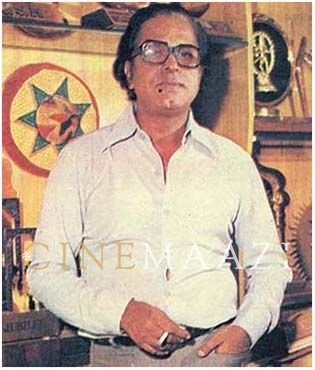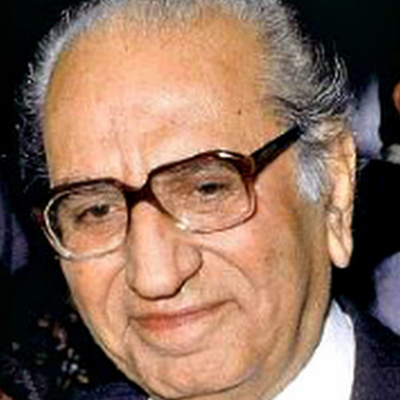
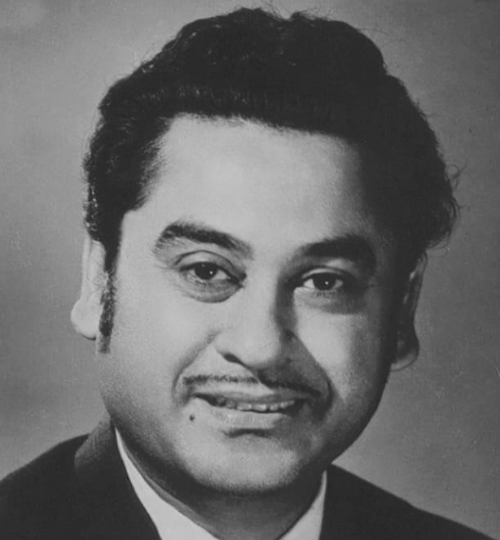
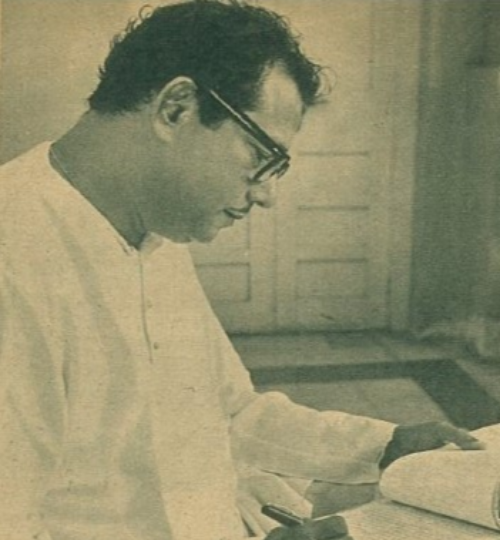
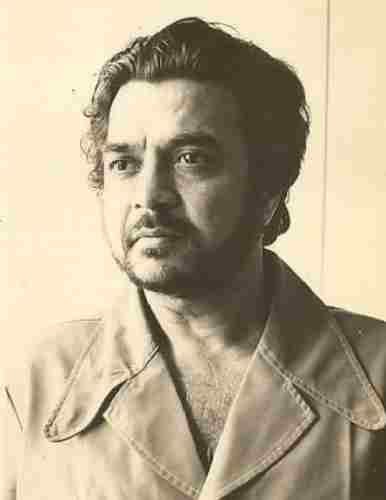
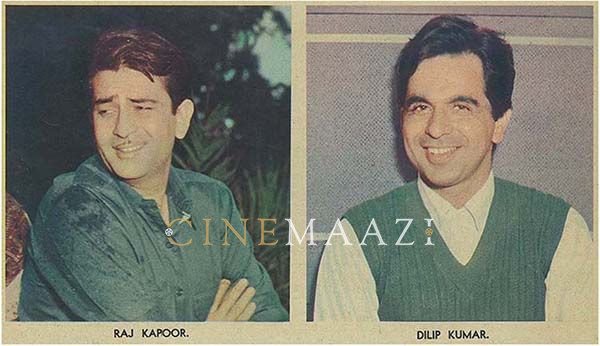
'Big Two' of Indian Films – Close-ups of Dilip Kumar and Raj Kapoor
28 Apr, 2026 | Archival Reproductions by Cinemaazi
Subscribe to read full article
This section is for paid subscribers only. Our subscription is only $37/- for one full year.
You get unlimited access to all paid section and features on the website with this subscription.
Not ready for a full subscription?
You can access this article for $2, and have it saved to your account for one year.
It was Oscar Wilde who once said: "As a rule, people who act lead the most commonplace lives."
Obviously, Wilde was more concerned with the shaping of a well-turned epigram rather than its truth, for a comparative study of those top celluloid idols, Dilip Kumar and Raj Kapoor, points to the fact that there is scarcely anything commonplace about their lives.
Theirs is a magical influence, able as they are to sway the emotions, mould the thought processes, fashion the dress tastes, hair styles, mannerisms, ideas, sentiments and behaviour patterns of their followers whose number is legion.
Dilip and Raj, around whom many a legend has grown, give expression on the screen to two basic human emotions: One makes the audience cry; the other makes it laugh.
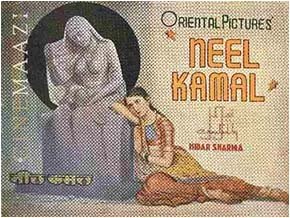
Dilip Kumar made his first major screen appearance in a film called "Milan" in 1947. Raj Kapoor played his first big role In "Neel Kamal" in 1946. Both had played incidental roles before.
Contemporaries in the fullest sense of the word, they appeared on the Indian film horizon at the same time and rose, over a period of a mere eight years, to become the topmost personalities of the Indian screen.
With the possible exception of leading politicians, it would be safe to say that no two public figures have exercised more sway over more Indians than the one who vicariously satisfies the tragic human emotions and the other who clowned his way across the sub-continent in an uproarious new definition of comedy which consists of grimacing, monkeying and hustling its spectator-participants into a condition of prolonged jubilance.
They gave expression to two basic human emotions. One made the nation cry; the other made it laugh.
The egoistical excesses of that self-styled genius, Orson Welles, once impelled a soured columnist to remark: "There, but for the grace of God, goes God." But, as Welles himself often fondly proclaims quoting Wilde, "I have nothing to declare except my genius," it is evident that all Thespians, be they small or great in dramatic stature, model themselves along these lines of flamboyant exhibitionism.
No less true is this of the exhibitionistic excesses of Raj Kapoor or the fantastic tales of romantic indulgences adorning the legend of Dilip Kumar, both of whom, not quite unconsciously, have perpetuated the tradition of romanticism.
The Legend Grew
The legend did not take long to grow round these clever showmen, both endowed with a tremendous ego and histrionic talent of an exceptional order.
Within the tour walls of their homes and studios, however, these actors have different facets to reveal, facets far more interesting in the human context than the legend they present the world.
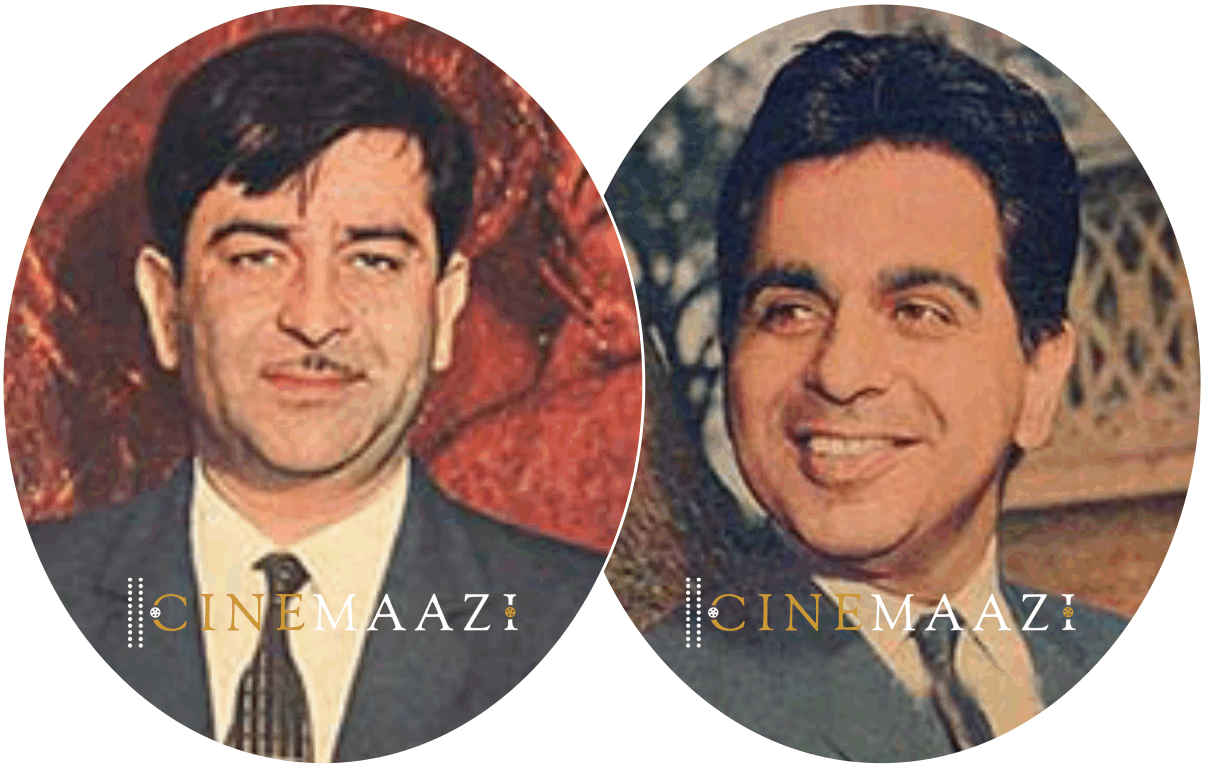
Both have much in common. Both were born in December at Peshawar - Dilip on December 11, 1923, and Raj on December 14, a year later. Both went to the same school, both had the same friends and, in later years, both were to enter the same profession.
But there the resemblance ends. Even as far back as their schooldays, the resemblance ended just there. From the first, Raj was the cocksure youngster, brimming with youthful over-confidence and drawn irresistibly to canalise his histrionic bent on stage and screen.
Dilip, on the other hand, was always self-effacing and retiring by nature, an introvert as against Raj, the extrovert. So much so in fact, that he used to refuse to take part in school theatricals. "I'll drop dead from sheer fright!" he would tell Raj.
The urge for expression which revealed itself in the form of exhibitionism in Raj, the buoyant show-off, was a hidden malady slowly eating away the heart of Dilip, the studious introvert. Each, in his own way, had to become an actor.
If, in their early twenties, Raj was a strutting spectator on the cricket-fields, with unkempt hair, sporting a pair of goggles that had only one arm fitting over a single ear, and Dilip sat at home reading Sartre, it did not mean that the same superhuman urge did not impel them both, although from opposite ends as it were, making them, with their contrary natures and radically opposite approaches to the histrionic art, two sides of the same priceless coin.
Thrown constantly together in the midget world of films, these two were soon to stride out, outpacing their lesser contemporaries, and assume a dual leadership which often expressed itself in keen competition and a smouldering, sometimes unapparent, rivalry.
That is why, in more ways than one, Mehboob's "Andaz" was a significant picture. Not only was it the first movie to gain for the Indian film a Hollywood standard of technique and artistry, but in it Raj Kapoor and Dilip Kumar appeared together for the first and only time of their careers.
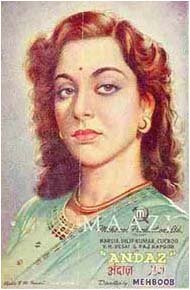
"Andaz" was released in March, 1949. A huge box office success (it was also a noteworthy film), it breathed below the surface the state of tension and conscious rivalry that must have existed between the Thespians, both intensely aware of the fact that here lay a contest that must come talent's way but once in a lifetime.
Every actor's trick, known and unknown, every subterfuge of scene-stealing, every device of action, under-acting and over-acting was employed by these two in an all-out "prestige effort."
The way both actors filled their roles was also significant for the emergence of Raj Kapoor and Dilip Kumar as they are known today.
For Dilip, the introvert, it was the beginning of maturity, when histrionism must come from a mystic fusion of brain and heart, when there must be an economy of physical movement, when a gesture, an expression, a flutter of the eyelids, a look, a vocal intonation, must do the work of a hundred spoken words and the tiresome bodily substitutes of acting.
For his contemporary, Raj, it was the emergence of an individualised set of mannerisms overdone for effect with flamboyant gestures, facial expressions and physical movements. Later these were frozen into a highly stylised pattern. It had the impact of newness and seemed to overshadow the underplay and subtlety of Dilip by its very ebullience and overplay.
After "Andaz", the path of the two actors bifurcates. A wider field of literary study and concentration on the intricacies of histrionics occupied Dilip Kumar, while Raj Kapoor embarked on the phase which was to bring him his greatest recognition.
A year before "Andaz," Raj Kapoor's first film "Aag," produced, directed and acted by him, was a moderate success. A year after, in March 1950, Raj's second film '"Barsaat," produced, directed and acted by him, made headlines as a box-office hit and became the springboard of an outstanding career in film making.
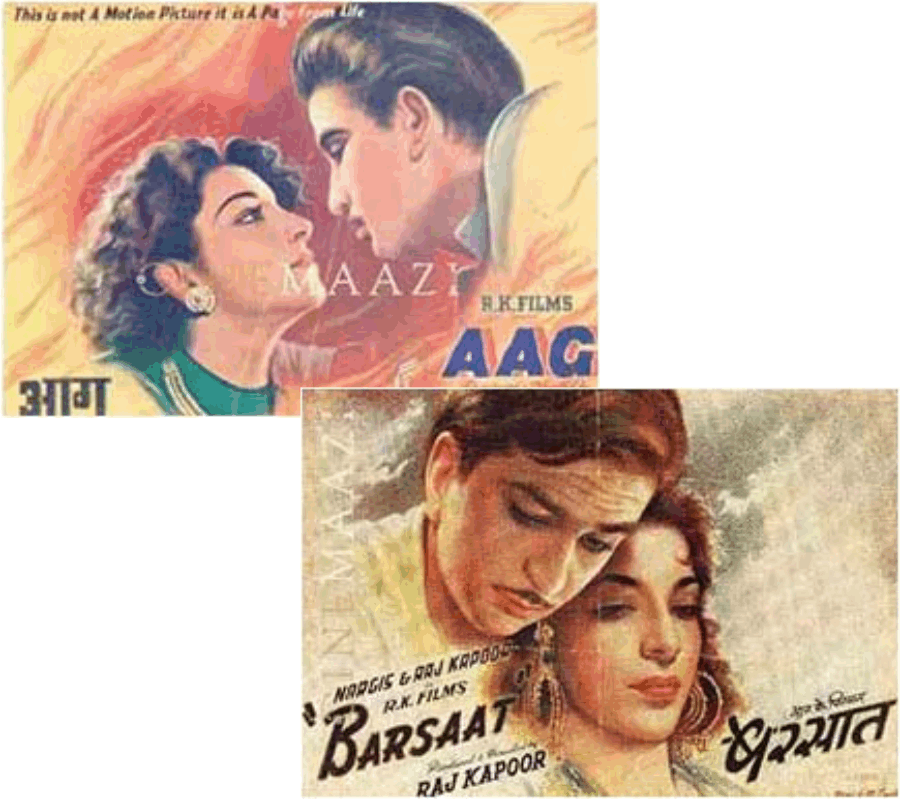
Single-minded concentration on their work and the widening social consciousness of both led Dilip on the one hand to observe that the improvement of films is a corollary to a country's development, economic and otherwise, and caused Raj to grow out of the romantic into the realistic in his concept of creative art. The two qualities were adjuncts to a private life as prosaic or colourful as that of the adolescent collegian or the "man in the street" who idolised them.
With Raj, the obsession was work. Possessing an inordinate capacity for hard work, he ideally fulfilled the observation that genius meant an infinite capacity for taking pains and, in the passionate drive of creation, would pass whole weeks in a round-the-clock effort, remaining unshaven, living on innumerable cigarettes-and his nerves.
Dilip, reaching the consummation of histrionic art by painful degrees, withdrew more and more into himself-living too, on his nerves and enriched, at great price to himself, by the fire of harrowing emotional experience in his personal life from which he emerged a greater human being.
Co-artist Nargis brought a steadying mellowing influence into Raj Kapoor's life. Acting together, they went through a series of mutual adjustments and understanding till the partnership attained the tuned fineness of the "sitar" string.
"A great part is no less great because it is indifferently played," once said that great actress, Tallulah Bankhead. And the greatest parts these two actors have played, or ever will play, were not in any film - but through themselves.
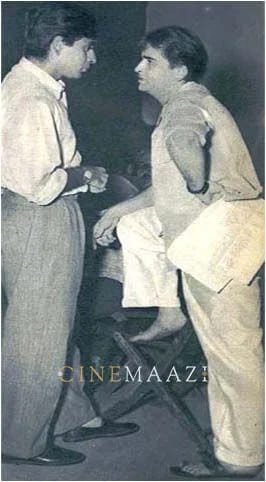
Dilip and Raj sans make-up.
Always on hand for a good cause, they are here discussing plans for a charity drive.
Always on hand for a good cause, they are here discussing plans for a charity drive.
Perhaps because of this, it will not rest with the contemporary scribe to assess the impact of their personalities on the mind of the community, in moulding and conditioning it to a way of behaviour, thought and life. He is too close to view the scene in perspective.
How well each of these artists played his part would lie in the domain of the historian of a passing generation.
This article was published in 'Filmfare' magazine's 21 January 1955 edition. written by Bunny Reuben.
The images and captions are from the original article and Cinemaazi archive.
About the Author

Other Articles by Cinemaazi
13 Jul,2026
V Shantaram's Views on FILM COUNCIL
07 Jul,2026
A History of the Indian Film - B D Garga
23 Jun,2026
कल ऐक्सट्रा था आज हीरो हूँ - Sanjeev Kumar
16 Jun,2026
Movie Stars-Leaders of Fashion
08 Jun,2026
Kurosawa the Versatile
02 Jun,2026
Yesterday Tomorrow - Nargis
12 May,2026
Britain and the Documentary Film - Marie Seton
05 May,2026
Body and Soul of Music
17 Feb,2026
Unforgettable Moments -Nalini Jaywant
17 Jan,2026
Shahenshah (1988) - Preview
16 Jan,2026
रेश्मी सलवार कुरता जाली का : O P Nayyar
14 Jan,2026
Patang (1960) - Picture Preview
20 Dec,2025
All My Christmases- Mala Sinha
29 Aug,2025
हमें तो विछड़ना ही था...Shailendra
23 Jul,2025
Lalita Lajmi on Guru Dutt: Unfinished Symphony
17 Jul,2025
Guru Dutt: The "Typical Hero" Tag Doesn't Fit
11 Jul,2025
Film in Retrospect: Images Images
08 Jul,2025
Hamlet of Films - Guru Dutt
05 Jul,2025
Khuda, Maut aur Ghulam... Guru Dutt
25 Jun,2025
नई शैली निराला संगीत - R D Burman
25 May,2025
आर्यसमाजी अध्यापक का बेटा, मैं... Dharmendra
17 Feb,2024
What is a Good Documentary Film?
25 Jan,2024
Salute to an Immortal Spirit
22 Jan,2024
A Painful Parting
29 Nov,2023
Children's Film Society
28 Oct,2023
Let's Give the Kids a Chance
26 Oct,2023
Directing the Child Actor
25 Oct,2023
Chandu - The Elephant Boy
23 Oct,2023
HEROISM-Children's Film Society gives the lead
18 Oct,2023
Munna
29 Sep,2023
ख्वाजा अहमद अब्बास का पत्र महात्मा गांधी के नाम
02 Sep,2023
Shakti Kapoor: It's Three Punches A Day
04 Jul,2023
Should a Filmmaker be Original?
24 Jun,2023
Babita My First Screen Love
22 Jun,2023
Phir Wohi Dil Laya Hoon
19 Jun,2023
Romance in Our Cinema
12 Jun,2023
The Romance of our Show Houses
12 Jun,2023
Kashmir Ki Kali (1964)
07 Jun,2023
Sangam (1964)
05 Jun,2023
This thing called Love
25 May,2023
Gandhi: Whose voice?
15 May,2023
"Deewar" Becomes a Nation's Prayer
15 May,2023
Mangal Pandey
06 May,2023
History of Cinema, History of the Nation
02 May,2023
Birbal Paristan Mein
20 Apr,2023
Reincarnation... the story goes on ever after
27 Mar,2023
The Film Director?
21 Mar,2023
M Sadiq
15 Mar,2023
The Social Role of the Cinema
15 Mar,2023
"Samaj" A Memorable Film with Popular Appeal
01 Mar,2023
"Two Eyes" in Hollywood
20 Feb,2023
Do Dooni Chaar
15 Feb,2023
Rafoo Chakkar
07 Feb,2023
Johnny Walker.... still going strong
20 Jan,2023
Mahabharat : Epic Tamasha
10 Jan,2023
Narsi Bhagat : An Excellent Biography
03 Jan,2023
Nav Ratri
01 Dec,2022
एक ताजगी का नाम है देवानन्द (Dev Anand)
25 Nov,2022
जे बी एच वाडिया (J B H Wadia) - वचन न जाए
14 Nov,2022
Children's Films in India
01 Sep,2022
Horses .... Cars and Laughs-Mehmood
06 Aug,2022
हिन्दी फिल्मों की दुर्दशा का जिम्मेदार कौन?
01 Aug,2022
क्या हिंदी फिल्मों से हास्य गायब हो रहा है?
20 Jul,2022
हास्य की परंपरा और हास्य अभिनेताओं की भूमिका
12 Jul,2022
प्राण (Pran) और उनकी दाढ़ियाँ
17 Feb,2022
Odds Against a New Comer
10 Dec,2021
Speaking of Portraits and People
03 Nov,2021
An Actor Prepares
19 Oct,2021
Producers' War on Dubbed Films
24 Aug,2021
Jottings from a Film Director's Notebook
26 Jul,2021
प्रेमचंद सत्यजीत राय और ’सद्गति’ -गिरिजाशंकर
22 Jul,2021
Rewind 1990 Commerce of Love Stories
20 Jul,2021
Eastern Scene: Cinema of Surviving Faith
22 Jun,2021
Movie Memories : Tansen (1943)
22 Jun,2021
Movie Memories: Sikandar (1941)
15 Jun,2021
Towards A Brighter Future- Bengali Cinema
20 May,2021
The Enigma Of A Flux - Malayalam Cinema
05 May,2021
The seesaw graph of Hindi filmdom
03 May,2021
Ankahee: The Unspoken
29 Apr,2021
The Mahatma Returns: World Press Reaction
29 Apr,2021
Children’s Films
17 Apr,2021
Telugu Cinema in 1986- Sons and Fathers
09 Apr,2021
Mukhamukham : Face to Face
08 Apr,2021
Tarang : Wages and Profits
01 Apr,2021
Design In Indian Cinema
27 Mar,2021
Movie Memories : Savkari Pash
23 Mar,2021
Double Trouble: Role of Twins In Hindi Cinema
22 Mar,2021
Prem Chopra: The Same Role For Ever
19 Mar,2021
Kalyan Kumar - Karnataka’s Self-Made Star
18 Mar,2021
Ceylon's Cyclonic Cinema
18 Mar,2021
Movie Memories : Aladdin & the Wonderful Lamp
17 Mar,2021
Kumari Padmini: Rising New Star Of The South
11 Mar,2021
50 YEARS OF MALAYALAM CINEMA
02 Mar,2021
Alakh Niranjan: Film India Review
27 Feb,2021
Party: The Story of Choices
26 Feb,2021
The Naushad Era In Hindi Film Music
19 Feb,2021
A Man: Amitabh Bachchan -Amitabh, is My Name
10 Feb,2021
A Man: Amitabh Bachchan - Two of a Kind
29 Jan,2021
Women In Hindi Films : Dichotomy of Values
22 Jan,2021
A Man: Amitabh Bachchan - Yesterday and Tomorrow
22 Jan,2021
Cinema in the South: Crisis of Character
18 Jan,2021
Film Societies Play Their Part
01 Jan,2021
Nutan : A Flashback - The Actress
30 Dec,2020
"Gwalan" Proves A Thrilling Entertainment !
29 Dec,2020
Rajesh Khanna : Echoes Of An Era- Family Of Four
28 Dec,2020
Holi: A Metaphor for Horizontal Violence
23 Dec,2020
A Summon for Mohan Joshi
22 Dec,2020
Nutan : A Flashback - The Friend
22 Dec,2020
Raj Kapoor Scores Personal Triumph In “Aag”!
19 Dec,2020
Smita Patil's Memoir- Trading Places
17 Dec,2020
Shashi Kapoor: Once Upon A Time- The Film Makers
16 Dec,2020
Rajesh Khanna : Echoes Of An Era- Peer Pressures
15 Dec,2020
“Lal Haveli”- Crude But Entertaining!
12 Dec,2020
Nutan : A Flashback - The Wife
10 Dec,2020
Rajesh Khanna : Echoes Of An Era
09 Dec,2020
"Lalkar" Presents Cheap Entertainment
07 Dec,2020
Smita Patil's Memoir-Comrades In Arms
01 Dec,2020
Shashi Kapoor: Once Upon A Time- Unjinxed
28 Nov,2020
Ek Din Ka Sultan- Becomes Good Entertainer !
26 Nov,2020
Smita Patil's Memoir- Friendly Strokes
25 Nov,2020
Shashi Kapoor: Once Upon A Time- Tough Times
07 Nov,2020
The Technician And His Problems
06 Nov,2020
We Must Inject Dynamism Into Publicity
05 Nov,2020
The Role Of Film Finance Corporation
04 Nov,2020
Progress In Raw Film
30 Oct,2020
Freedom In Films
28 Oct,2020
Export Market For Indian Films
23 Oct,2020
The Growth of The Motion Picture
22 Oct,2020
Setup Of The Film Industry
21 Oct,2020
Few Facts About Film Production
13 Oct,2020
Personalisation In Cinema
08 Oct,2020
Waiting for a Doyen's Glance- Arati Bhattacharya
08 Oct,2020
कौन सुनेगा इन सिसकती बिलखती प्रतिभाओं का विलाप?
06 Oct,2020
Asrani - Laugh And The World Laughs With You
05 Oct,2020
My Memorable Roles- Hiralal
03 Oct,2020
राजीव गोस्वामी - कहां थे अब तक 'पेंटर बाबू'?
03 Oct,2020
जब नफरत से बेड़ा पार हो गया: बलराज साहनी
30 Sep,2020
The Case of Emotional Turmoil In Dopatta (1952)
29 Sep,2020
The Story Of A Child Artiste - Sheela Kashimiri
26 Sep,2020
Afsana Likh Rahi Hoon : Tun Tun
26 Sep,2020
Some Hopes For The New Year: Lillian
24 Sep,2020
Joru Ka Bhai: A Tale of 'Atithi Tum Kab Jaoge'
22 Sep,2020
अभिनेता प्रेमअदीब से भेंट
21 Sep,2020
Vijaylaxmi: A Career As The 'Other' Woman
18 Sep,2020
Shaminder: The Actor Who Had High Hopes
16 Sep,2020
धर्मेन्द्र - समय आ रहा है...
14 Sep,2020
Film Life After Fifty : Motilal
14 Sep,2020
प्रसिद्ध फिल्म लेखक गुलशन नंदा से आपकी बातचीत
11 Sep,2020
"I live on hope"- Kumkum
11 Sep,2020
Thehr Zara O Jane Wale : Madhubala Jhaveri
09 Sep,2020
Ratnamala Attracts Attention In ‘Station Master’
08 Sep,2020
Ghory: The Laurel Of Indian Cinema's Comedy Duo
07 Sep,2020
Yeh Teri Saadgi, Yeh Tera Baankpan: Usha Khanna
07 Sep,2020
सेनापति शेट्टी
05 Sep,2020
कृतिदेव यहां मैं, तनूजा, स्वीकार करती हूँ
05 Sep,2020
मै उर्मिला को भूल नहीं पाती - मंजरी
04 Sep,2020
बुलबुल बंगाल की: चंद्राणी मुखर्जी
03 Sep,2020
Payyal's Lucky Break
02 Sep,2020
These Foreign Producers
29 Aug,2020
The Practical Actress: Shabnam
29 Aug,2020
“Amrit” Becomes A First Class Picture
28 Aug,2020
फिल्मी मारपीट के गुरू : अजीम भाई
26 Aug,2020
From Poverty to Screen Fame - Mehboob Khan
26 Aug,2020
Humility: Nasreen's Most Admirable Feature
24 Aug,2020
A Mercenary Comes To India - Bob Christo
23 Aug,2020
Dilip Kumar: The Leader
19 Aug,2020
Alam Ara: Ardeshir Irani's Ambitious Secret
17 Aug,2020
I Serve My Art- Kanan Devi
10 Jul,2020
.jpg)