
FOUR decades of Tamil films by V S Gopalakrishnan
Subscribe to read full article
This section is for paid subscribers only. Our subscription is only $37/- for one full year.
You get unlimited access to all paid section and features on the website with this subscription.
Not ready for a full subscription?
You can access this article for $2, and have it saved to your account for one year.
THE Second World War hit the Tamil film industry as it did everything else. In 1943 only ten films were made. The following year M. K. Thyagaraja Bhagavathar and P. U. Chinnappa starred in two of their most successful films, namely, "Haridas," directed by Sunderrao Nadkarni, and "Jagadalaprathapan," produced by Sriramulu Naidu. "Haridas" set a record with a run of more than two years at a single theatre.
The year 1945 was also a lean one, but it was notable for the screening of "Meera," a musical extravaganza. Directed by Ellis R. Duncan, the film brought nation-wide fame to its star, M. S. Subbulakshmi. The bhajans of the film have been popular ever since and even today M. S. Subbulakshmi sings them at her concerts. To "Meera" also went the distinction of being the first Tamil film to be exhibited abroad when it was shown at the Karlovy Vary and Venice Film Festivals in 1949.
Although the number of mythologicals had dwindled in the course of years, they were still being made. In 1945 "Sri Valli" brought renown to T. R. Mahalingam, who acted and sang in it with Kumari Rukmini as his co-star.
India's Independence in 1947 ushered in a period of prosperity. A. V. M. scored a success with ''Nam Iruvar" which further enhanced T. R. Mahalingam's stature as an actor-singer. Two years later, A. V. Meiyappan Chettiar established his own studios, but in 1947 B. Nagi Reddi and his associates had set up Vauhini, the largest studio in the country.
The triumph of the Hindi version of "Chandralekha" paved the way for several South Indian producers like S M Sriramulu Naidu, A. V. Meiyappan, Sivaji Ganesan, L. V. Prasad to make their films in Hindi. The hero and villain of "Chandralekha" were M. K. Radha and Ranjan. M.K. Radha was already a veteran of the stage and screen, and Ranjan now entered the Hindi film world.
About this time the Tamil film underwent an ideological transformation. In the inspiring atmosphere of the newly-won independence and with fewer censorship restrictions under a national Government, more and more films which dealt with contemporary social and economic problems were made. N. S. Krishnan produced "Nalla Thambi," an excellent film which was full of wit and humour and pointed a moral. Bhanumathi portrayed the heroine. A star of the Telugu screen, she stayed on in Tamil films to achieve success and popularity. She also established her own Bharani Studios.
Another actress from Andhra who became a top-flight artiste in Tamil films was Anjali Devi.
Following up his success with "Chandralekha," Vasan produced "Apoorva Sahodarargal" and made a Hindi version of it entitled "Nishan". The story is similar to that of "The Corsican Brothers".
Indicating the shape of things to come in Tamil films was "Velaikkari," written by C. N. Annadorai, the D. M. K. leader. This. stringent satire on the caste system stirred up the still waters of complacency in the South. With K. R. Ramaswamy as the hero, the film had veteran T. S. Baliah as a supporting actor.
Baliah, who made his debut in 1934, has so far acted in more than one hundred films. While in his heyday he excelled in comical villain roles, today he is still doing well in supporting roles; mainly those of good samaritans.
The year 1950 marked the starting point of the careers of two stars, one of whom is now at the height of her vocation. Padmini, the most famous of the Travancore Sisters, made her debut in "Veetukkari" and went on to score success after success in both Tamil and Hindi films, ending a distinguished career with her retirement after her marriage in 1961.
The other actress, who won stardom in both Tamil and Hindi films in her very first picture, is the vivacious Vyjayanthimala, daughter of the no less talented Vasundhara Devi. Starring in A.V.M.'s "Vazhkai," which was later re-made in Hindi with the title "Bahar", Vyjayanthimala was an instant hit and has not looked back since. Her chain of successes has no precedent.
Around this time a significant development took place which restored acting ability to its proper place. Even as playback singing came into vogue in the North, the South lost no time in emulating the system, and singers like T. M. Soundara Rajan, Ghantashala Venkateswara Rao, A. M. Raja, M. L. Vasanthakumari of the classical music fame, P. Leela, T. V. Rathnam and Jikki became prominent in the film world. The singing ability of artistes was no longer the main criterion for stardom.
In 1950 veteran character actor Chittoor V Nagiah scored a memorable success in "Ezhai Padum Padu,'' Tamil version of "Les Miserables". Nagiah's portrayal of Jean Valjean was brilliant. Here was another gift of Andhra to the Tamil screen. As far back as 1939 and 1940 his portrayals of the devotional roles of Thyagayya, the great South Indian composer, and Baktha Chetha had won him acclaim. In 1953 he topped his triumphs with an excellent performance in "En Veedu," which he also produced and directed. Today he is still good enough in diverse supporting roles.
S. V. Sahasranamam, who played the villain in "Vazhkai,'' is a character actor who has turned producer. He has his own stage troupe and is held in respect in the film industry's circles.
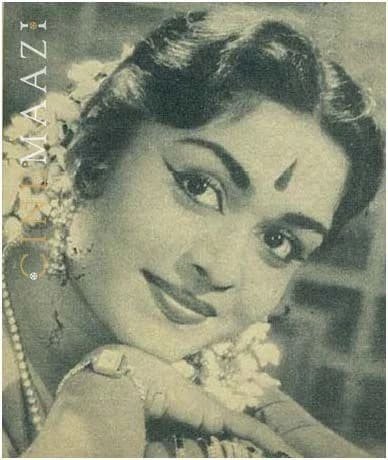
A Brilliant Star
In 1952 a brilliant star appeared on the film horizon. He has since overshadowed all other actors and is undoubtedly one of the finest actors India has ever produced. Sivaji Ganesan was on the stage in Madurai, where he used to take female as well as comic parts. Perumal, producer of "Parasakthi;" and its directors Krishnan and Panju noted Sivaji's talent and chose him for the tragic role of Gunasekharan in a story which scathingly criticised the caste system and idol worship.
Sivaji welcomed the opportunity of a screen career, and with each assignment went from success to success. The role was tailor-made for him, for he was gifted with a stentorian voice and his delivery of dialogue was flawless. He put it over with aplomb. Today he is a mature, consummate actor who also has a stage troupe.
Second only to Sivaji Ganesan in popularity are Gemini Ganesan and M. G. Ramachandran. Ramachandran came into prominence in. the 'fifties and is doubly popular with a section of the audience because of his active association with the D. M. K. Adept in riding and fencing, he is generally at home in swashbuckling roles. Four years ago he produced, directed and acted in that box-office hit, "Nadodi Mannan". Like Sivaji Ganesan, he also heads a dramatic company.
Gemini R. Ganesan began his film career in "Thayullam" in 1952. Known as "Kathal Mannan" (King of Love), he has no equal in putting over sophisticated roles or in enacting romantic scenes. Teamed with Savithri, he scored a notable success in "Missiamma," directed by L.V. Prasad. The Hindi version was entitled "Miss Mary". "Missiamma" was shown at the recent film festival held at Jakarta and was accorded a, good reception.
This romantic team carried their roles into real life—and were soon married.
In 1953 Vasan's Gemini Studio produced another stirring motion picture "Avvaiyar,'' starring K. B. Sundarambal, the veteran stage and screen artiste who had retired but returned to the screen to sing and act in this film. It was directed by Kothamangalam Subbu, a talented writer, director and actor who in 1947 played the same role in "Miss Malini" that Motilal played in its Hindi version, "Mr. Sampath".
To S. Balachandar, a versatile artiste who could handle the veena as deftly as the megaphone, went the credit of directing the first Indian film without song or dance. The film was "Anda Naal," a detective story starring Sivaji Ganesan and Javert Seetharaman, an I. C. S. officer. Seetharaman got the sobriquet of "Javert" after he had played that role in "Ezhai Padum Padu" in 1950. In "Odathe Nil," Balachandar has been experimenting with no make-up for the artistes, but the film has yet to see the light of day.
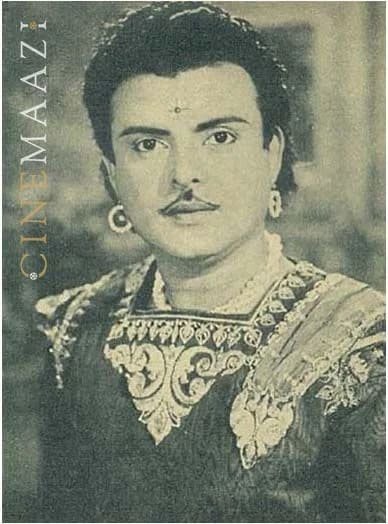
The volatile M. R. Radha, who infuses comedy into his villain roles, brought his superb stage portrayal of a leper to the screen in "Raktha Kanneer" in 1954. After a long absence, he has returned to .films and at the age of 60 he is still much sought-after.
Colour came to the Tamil screen in 1955. In that year T. R. Sundaram, owner of the Modern Theatres, of Salem, and a veteran director, produced the first full-length colour film "Ali Baba and the Forty Thieves". Starring M. G. Ramachandran and Bhanumathi, it scored at the box-office.
By now the Hindi and Tamil film industries had been drawn closer to each other than ever before. Hindi films like "Uran Khatola," "Nau Bahar" and "Zimbo" were being dubbed in Tamil, and Tamil films like "Uthama Puthran" and "Thanga Malai Rahasyam" were being dubbed in Hindi. South Indian producers were making Hindi films which had a high standard as well as mass appeal. "Azad," "Nazrana," "Sasural," "Gharana," "Ghunghat," "Paigham," "Bindya" and "Chhaya" are some of these productions. This collaboration also proved an excellent medium of national integration.
Popular Heroines
At the Afro-Asian Film Festival held at Cairo in 1959 Sivaji Ganesan was adjudged the best actor for his superb portrayal of the title role in "Veera Pandya Kattabomman," filmed in Geva Colour. He had perfected himself in this role on the stage and its screen success spurred him to greater efforts. Last year he gave another splendid performance in "Kappalottiya Tamizhan". In this film he lived the role of the Tamil patriot V. O. Chidambaram Pillai who rebelled against the British and organised a shipping line.
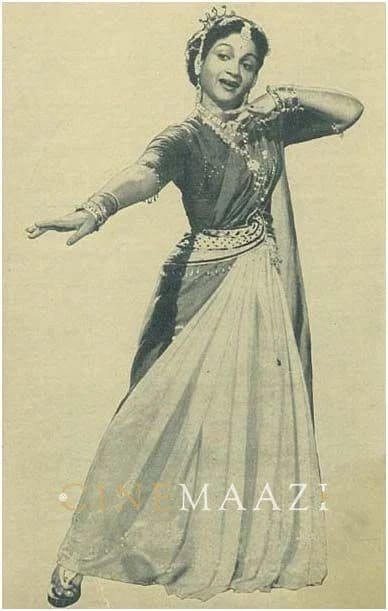
Both "Kattabomman" and "Kappalottiya "Tamizhan" were the outcome of the patriotic zeal of Producer-director B. R. Panthulu who gave no thought to the box-office in making these films.
Two popular heroines of Tamil films today are Savithri and B. Saroja Devi. Saroja Devi is from the Kannada Screen and. her performances in "Nazrana" and "Sasural" have also made her familiar to North Indian audiences. One of the most successful films of 1961 was "Pava Mannippu," starring the two Ganesans. All its eight songs became hits. Viswanathan and Ramamurthy, the popular team of melodymakers, provided the music in this film. It was directed by A. Bheemsingh who with Sivaji Ganesan the hero and Viswanathan and Ramamurthy as music directors has turned out one box-office hit after another.
In 1960 Bheemsingh directed Bala Art Movies' "Padikkatha Methai" in which S. V. Ranga Rao, another instance of acting talent contributed by Andhra, was a match for Sivaji Ganesan in every scene in which they appeared together. Last year "Pasa Malar" brought out the best in Sivaji Ganesan and this film is now being made in Hindi with Ashok Kumar.
Story-writer producer and director Shridhar added yet another feather to his cap when he produced and directed within the record time of three weeks that gripping and most successful film "Nenjil Oar Alayam". A remarkable feature of this film was that Shridhar had only supporting actors Mathuraman and Kalyankumar in the starring roles, and for good measure he introduced a new artiste, Baby Padmini, in it.
Problems Of The Industry
It is a far cry from 1917, when the first Tamil film "Keechak Vadha" made its modest appearance, to today. During these four decades the Tamil film industry has taken great strides, but those years have also been a period of trial and error. The cinematic techniques have improved immensely and the number of discriminating cinegoers who appreciate the finer points of cinema is on the increase. Today the Tamil film industry is a vast organisation, comprising 250 registered producers, 23 studios (studios like Gemini and Vauhini are among the best) with 70 floors, processing laboratories and a colour laboratory with modern equipment. There are about 600 film distributors.
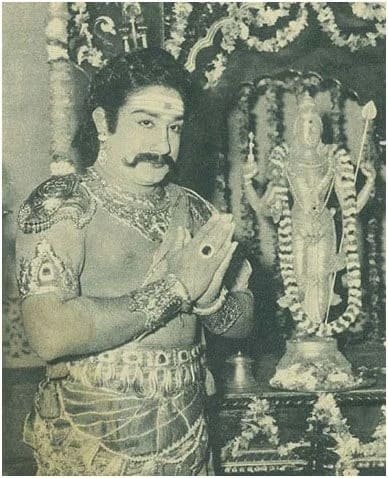
Best Actor Award at the Afro-Asian Film Festival for his performance in this film
Of the 3,400 theatres in the country, the South alone accounts for 2,000, Madras state claiming about 1,000. More modern cinema-houses are being built. In the last two decades attendance at movies has increased three-fold, with a corresponding rise in the revenue of the Government by way of the entertainment tax.
This tremendous development was accompanied by problems not dissimilar to those of the Hindi film industry. Lack of new talent, dearth of story material and, above all, scarcity of finance hamper the industry. As in the North, producers who followed the get-rich-quick policy paved the way for the star system. This pernicious practice at one stage held the industry to ransom and almost paralysed it. Today the production of more than one hundred films is at a standstill because the stars are not co-operative and finance is not forthcoming.
Despite all these handicaps, the Tamil film industry commands a far-flung market—in Malaya, Indonesia, Burma, Ceylon and the Middle East. But the fact that during the 44 years of its existence the Tamil motion picture industry has contributed fewer than half a dozen films to festivals abroad has its own moral. If producers were to pay more attention to improved techniques, lay greater stress on thematic content and strive for realism, and pay less heed to box-office formulas like song-and-dance numbers, the Tamil film would vindicate the promise it showed long ago.
The images and captions are from the orginal article.
About the Author