Kurosawa the Versatile
08 Jun, 2026 | Archival Reproductions by Cinemaazi
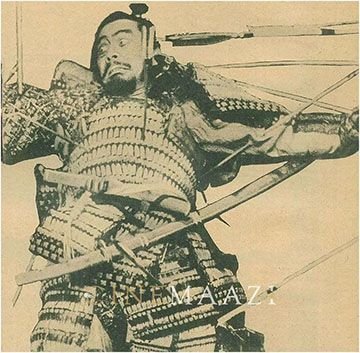
Toshiro Mifune in a dramatic scene from ''Rashomon," which re-created the past with such force and brutality. Those who have seen the film will agree that Kurosawa, who directed it, has outstanding cinematic sense.
Subscribe to read full article
This section is for paid subscribers only. Our subscription is only $37/- for one full year.
You get unlimited access to all paid section and features on the website with this subscription.
Not ready for a full subscription?
You can access this article for $2, and have it saved to your account for one year.
It will be recalled that Sergei Eisenstein was captivated by the cinematic elements he found in Japanese art, especially in print-making and in the Kabuki Theatre. In 1929 he was invited to write what he called an "Afterword" to a pamphlet on Japanese Cinema.
"If Eisenstein had lived to see 'Rashomon,' which suddenly catapulted Japan onto the world scene of cinematography, he would have been thrilled to discover a Japanese director (Akira Kurosawa) with a range of cinematic vision almost as wide as his own."
He commenced his "Afterword" with the drastic statement that the pamphlet was "about the cinema of a country that has no cinematography. About the cinema of a country that has, in its culture, an infinite number of cinematographic traits, strewn everywhere with the sole exception of-its cinema... The Japanese cinema is excellently equipped with corporations, actors, and stories. But it is completely unaware of montage (editing methods)."
In order to have an accurate perspective of Japanese cinematic development it is important to stress that Japan produced its first films only one year after the first motion pictures were presented in Europe, that is, 1896.
The forerunner of the present Shochiku Company, one of the largest producing companies of Japan, was founded as early as 1905. By the early 1920's, when the American motion picture had gained the monopoly of international distribution, film production in Japan had become a major industry. By the mid-1920's the Japanese were producing over 800 feature films a year, thereby topping by nearly 100 the annual production figure for the United States.
Yet the world hardly ever saw a Japanese film until the tremendous international success of Akira Kurosawa's ''Rashomon" in 1950.
If Eisenstein had lived to see "Rashomon", which suddenly catapulted Japan onto the world scene of cinematography (as Eisenstein's "Potemkin" catapulted Russia no less unexpectedly in 1925), he would have been thrilled to discover a Japanese director with a range of cinematic vision almost as wide as his own.
As Jay Leyda, editor of Eisenstein's two books of essays, says of Kurosawa: "His shots are, always and primarily, compositions in movement; these can be the slashing movement-compositions of the fight, or they can be as delicately unexpected as a half-screened composition by Utamara (one of the great Japanese print-makers)."
Born in 1910, Kurosawa's first contact with the arts was as a painter. But he gave up painting because he felt he had no great talent in it and entered the cinema in 1936 as a scriptwriter and assistant director to Kajiro Yamamoto. Between 1940, when he worked as both script-writer and assistant director for Yamamoto's picture ''The Horse", and 1950, when he completed "Rashomon", Kurosawa directed several films of contemporary life. His first lone venture in directing was a film in two parts written by himself, "Sugata Sanshiro" (1943), a melodrama about a judo champion. It was a great success commercially.
But during this ten-year period he was hampered by wartime and post-war censorship, for Kurosawa, like almost all major directors anywhere in the world, could not easily fit himself into any pattern of orthodox filmmaking or thought. One of his films, "He Who Steps on the Tiger's Tail," which was completed at the end of the war, was banned by the Occupation Authorities until after the success of "Rashomon". The reason was that the film–a costume picture based on a classic–was allegedly likely to keep alive sentiments in favour of feudalism.
Like almost all Japanese film directors, Kurosawa served a long apprenticeship before his style acquired its own individuality. Since then, versatility has been the hallmark of Kurosawa, even though the world at large knows him best as the director of the two costume films, "Rashomon" (1950) and "The Seven Samurai" (1954), both of which are now included in the category of international classics.
Kurosawa, like Eisenstein two decades earlier, has tried to solve a different cinematic problem in each of his films. He has stated categorically that in order to keep himself fresh and not repeat himself he prefers to alternate between costume films and films of a contemporary, or near-contemporary, setting. Thus, two of his more recent films, "Throne of Blood" -1957 (based on Shakespeare's "Macbeth") and "The Lower Depths" (based on Maxim Gorky's play) which immediately followed, could not be more strikingly different. I will mention these films in detail later on and here only draw attention to the difference in their general style. The former employed a great deal of stylization in speech as well as movement, while the latter is an outstanding study of cinematic realism.
Kurosawa has ranged far and wide for his basic themes although he never left Japan until the autumn of 1957. His films have included adaptations of Fyodor Dostoievsky's "The Idiot", as well as "Macbeth" and Gorky's "The Lower Depths". He is the only film director to have formed a stock company of actors who have appeared over a number of years in his films. His leading actor is Toshiro Mifune, who played the Bandit in "Rashomon".
It is an interesting and indeed an important comment on the attitude of Japanese audiences that the names of Akira Kurosawa and other important directors are billed in Japan in considerably larger script than the names of stars. Without boasting, Kurosawa says that he and other leading directors receive a larger fan mail than the stars, especially from the young.
His films, although almost all of them pose what might be called a philosophic question, have so far made more money in Japan than pictures which come more obviously under the category of entertainment films. He says that so long as his films do not lose money he is left free to choose the themes he wishes.
He contends that while there is a very large audience in Japan for films which in other countries would be regarded as specialised theatre releases, the Japanese, nevertheless, are a people who, to his way of thinking, have put too high a stock on prettiness.
He thinks they have failed to look deeply under the surface, or, in Kurosawa's own words: "It still remains in the Japanese mind to make things look pretty." He regards this as a vulgarisation of an earlier standard of values when much of beauty, as opposed to the pretty, was created in Japan.
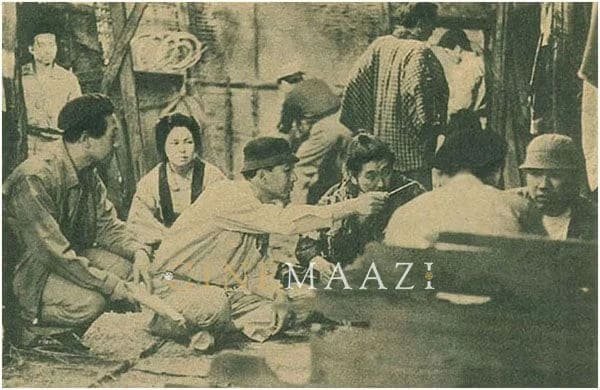
Depths," which was completed within ten weeks.
Kurosawa was not the only Japanese who complained to me while I was in Japan about superficiality. In fact, I was made aware of a great deal of self-criticism. I asked Kurosawa to what he attributed this attitude of self-criticism. He answered: "Zen Buddhism."
Someone else gave the answer "Zen Buddhism" to a question that applies to a number of Kurosawa's films. The question was: "Why do so many Japanese films have tragic or inconclusive endings?" The reply in full was: "Because we are steeped in Zen Buddhism and feel that life is fundamentally tragic and all the beauty and prettiness with which we seek to surround ourselves is all illusion."
In Japan, the film with an unhappy ending is "box-office" as it is nowhere else in the world. Tragic endings, or endings which provoke philosophic speculation, are characteristic of Kurosawa's films. He believes that the cinema has the power to make people search their own hearts and to look deeper into human nature. It was this that prompted him to make a film of Dostoievsky's novel, "The Idiot" (Kurosawa's favourite of the films he has made), and also Gorky's play.
He thinks that certain Russian writers have depth and universality in the presentation of characters which make their works suitable for translating into Japanese settings.
He admits that his films are dominated by male characters and says: "I don't understand women as well as men. Men are more interesting. Women characters are more limited. As a whole, Japanese women are not so expressive as men. Perhaps this is due to tradition. I'm interested in women with distinctive character." For this reason he chose Shakespeare's "Macbeth."
It is unfortunate that Indian audiences know only Kurosawa's "Rashomon". Those who have seen this film will accept the statement that Kurosawa is possessed of an outstanding cinematic sense. His sequences of movement through the forest, building up to an intense climax, have seldom been excelled.
When I first saw this film, and knew nothing about Kurosawa having entered the arts originally as a painter, I was struck by the impression that in this film Japan's tradition in painting had been dynamically used to enrich a film concept. I also felt that the acting had been influenced by the stylized gestures characteristic of the Japanese Kabuki Theatre, and that it was this stylization which lent a sort of special realism to the distant period presented.
I found it far more convincing as a picture of a past period than all but a very few Western costume films.
Kurosawa's cinematic sense is so strong that he is one of the directors who can take up a subject which depends almost entirely upon dialogue and characterisation and still make it exciting to watch.
While I was in Japan I saw his film "I Live in Fear "- the story of a man who is obsessed by the idea that everything in the world has become radio-active. The film is composed of a series of sequences in which the members of the man's family discuss his obsessive fear, and he discusses his convictions with various people. There is relatively little action. I saw the film without subtitles. So, not knowing Japanese, I didn't understand the dialogue. Yet my attention never wavered for a moment, because every shot had a dynamic visual meaning. I felt that this was a unique test of a director's inherent cinematic sense. Kurosawa's camera and the sensitivity of his direction of actors made it possible for me to understand the emotions of the characters even though I could not understand their actual speech.
I was also deeply impressed that the director of "Rashomon" and ''The Seven Samurai", who could re-create the atmosphere of a past period with such force, even brutality, could handle actors in a contemporary setting with such perceptive modulation of their style.
This variation in acting for the costume film and the contemporary film seems to me to be one of the outstanding contributions of the Japanese film, especially of Kurosawa's films.
In Japan I had the opportunity to watch Kurosawa rehearsing his actors for "The Lower Depths," which was to go before the cameras the next day. For this film he had embarked on a unique experiment. He had broken down Gorky's stage-play into twenty-two long sequences to be played on two sets-the interior of a doss-house and the exterior of the same doss-house. The two sets had been constructed and ready for twenty days before shooting was to commence. The costumes, too, were ready at the time the rehearsals began. So the actors rehearsed for twenty days on a set closely resembling a stage set, and in costume and make-up.
The actors themselves claimed that this unusually long period of rehearsal had enabled them to build up the characters they were playing as never before in their cinema-acting experience. They were very enthusiastic, for they felt that Kurosawa had, by this experiment, given them a chance to contribute more than they had contributed formerly. They thought that such long rehearsal might reduce the importance of the director.
Of the numerous directors I have watched on the set, I have seldom seen a director with a more sympathetic and genial attitude towards his actors than Kurosawa. This was the last rehearsal and almost every small scene between the odd assortment of Gorky's doss-house characters was gone through twice. On the second run through, Kurosawa leapt onto the set (kicking off his slippers as he did so, as is customary in Japan) and made a small suggestion of alteration. He checked the camera set-ups for the three cameras which were to be used.
The creatively exciting thing about this final rehearsal was that it was a very finished performance which could have been transferred there and then to the stage.
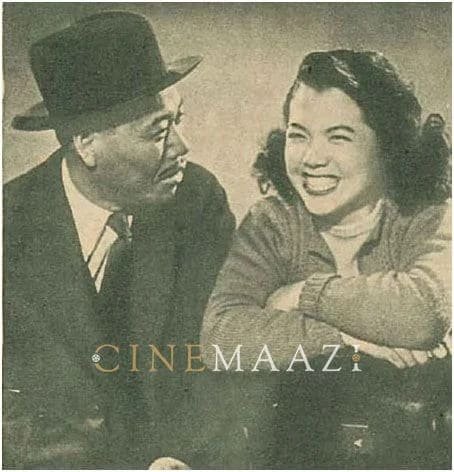
''Kurosawa, like Eisenstein two decades earlier, has tried to solve a different cinematic problem in each of his films."
But when I saw the film some months later at the Japanese Film Season held at London's National Film Theatre, I was seeing a film and not a stage-play transferred to celluloid. Rehearsed almost as a stage-play, Kurosawa's film sense had come into play through his camera angles. I think I should mention here that even a major film of Kurosawa's is completed within ten weeks, the generally accepted production period for an important film in Japan.
I visited a number of sets in Japanese studios, and in every case I was impressed by the care and veracity of set building. But I was fascinated by the care with which Kurosawa looked over his exterior doss-house set after the rehearsal was over. Kurosawa and his whole technical staff trooped out to take a last look at the exterior set of Gorky's doss-house, now a derelict Japanese doss-house. It had been constructed on the lot of the Toho Studio; but as we approached I got the impression that I was looking at a genuinely derelict house. It was the most convincing-looking set I had ever seen.
I asked Kurosawa's young art director, Yoshiro Muraki, whether the building had been constructed from the wood from an old building. He said "No" and then told me how this astonishingly realistic-looking set had been created. He said that the wood used was new wood, but it had been put through an elaborate process of burning, then it had been rubbed down and treated to give it an appearance of rottenness. Muraki claimed that almost any effect could be achieved through the skill of the Japanese studio carpenters.
While we were talking about the set, I observed Kurosawa and his cameraman. They looked at the set from every angle. Kurosawa commented that there were not enough weeds growing in the yard in front, nor on the roof.
Then he went up to a cliff at the back of the set and looked at the roof from every angle for overhead shots. I noticed the enthusiasm of all the technicians even though it was quite late in the evening and they had put in a full day's work.
I felt that Akira Kurosawa was perhaps the best tempered director I had ever watched at work, and because of his friendliness he inspired the quality of work in others which makes his films so harmonious a synthesis of careful craftsmanship and artistry.
I would like to select two very different films of Kurosawa to convey his range–"Doomed" (its original title was "Living"), which won a Grand Prix at Venice and the Silver Bear Prize at the Berlin Film Festival in 1954, and "Throne of Blood" (1957).
"Doomed" opens in a Municipal Office where Kanji Watanabe (played by Takashi Shimura, who appeared as the samurai leader in "The Seven Samurai ") is a clerk. A group of women presents a petition for a children's playground and this he lays aside, for he is due to go to a doctor.
At the hospital he is told that he has cancer and only a few months to live. He goes home to his son and daughter-in-law in abject terror of death. To make his terror worse, he realises that they do not want him. It comes to him that he has lived the whole of his life, but never lived at all.
He stumbles out to live before he dies. Drawing out his savings, Watanabe plunges into the night-life of Tokyo with a drunken poet as his companion. These scenes of hectic Tokyo night-clubs and strident jazz only intensify the intolerable sense of a wasted life and loneliness.
The clerk then meets a young girl, played by Miki Odagiri, who conveys all the freshness and also the odd indifference and cruelty of youth suddenly faced with the mixture of kindness and lechery which springs up in Watanabe. The scenes between these two have extreme poignancy. The liveliness of the girl inspires the dying clerk to make one contribution to life before he dies. Through his efforts a children's playground is made and he dies swinging in a children's swing.
This part of "Doomed" is memorable for its sensitive portrayal of the clerk and the girl. It is given a dynamic cinematic element by the scenes set in various vividly contemporary surroundings–the Municipal Office, drab and cluttered with red-tape type of human beings, the garish night-club and the tea-house where the clerk and the girl meet against the background of a teenage party visible on the balcony above. One feels a man moving towards his death in the midst of city movements.
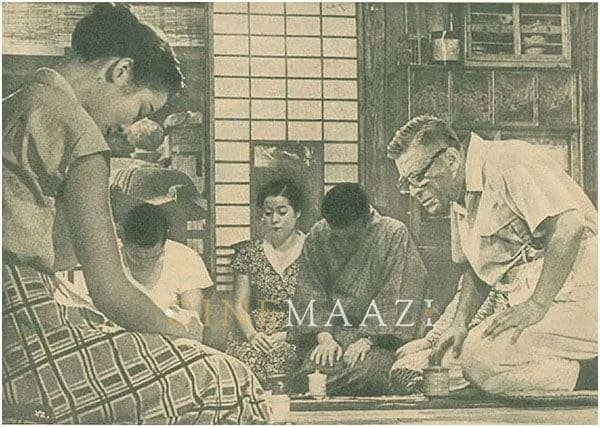
Fear," the story of a man who is obsessed with the fear that everything in the world has
become radio-active.
But Kurosawa does not end his film with Watanabe's death. He adds a coda of philosophic irony which is in an utterly different cinematic mood-at moments biting satire. Watanabe's Municipal Office colleagues hold a memorial meeting. They re-create his life so that the man who felt his life to be meaningless is, after death, exaggerated into the figure of a hero. As the colleagues recount his doings and compete with one another in the tales they tell, they one and all get drunk.
One is left wondering, as in "Rashomon," as to which version of this man's life is nearer to the truth-the subjective version of the first part or that of the memorial meeting. "Doomed" is a very thoughtful film with streaks of comedy which give life to a theme of death. It lingers in the mind for a very long time because it comes so close to what life really is.
It is very difficult to believe that the director of ''Doomed" is also the director of "Throne of Blood," which, as an interpretation of "Macbeth," is more interesting to me personally than any stage production of the play I have ever seen.
There are many people in the West who greatly dislike this Kurosawa film, and it is not regarded as one of his international successes. Nevertheless, Kurosawa's adaptation of "Macbeth" is one of the Japanese films which afford extreme interest to anyone with a general taste for the characteristics of Japanese art.
Japanese art eliminates all superfluous details; it concentrates upon essentials. Hence, in adapting "Macbeth'' Kurosawa and his associated screen-writers eliminated several characters, including Lady McDuff, the child and the Doctor; while the Three Weird Women have been condensed into one Weird Woman. The setting and the names of all the characters have been changed to Japanese.
The adaptation seems very legitimate, considering that Shakespeare himself frequently took his themes from collections of ancient tales and did exactly what he wanted with them regardless of how far he deviated from the original! The spirit of Shakespeare's barbarous Scotland fits the no less barbarous clan society of ancient Japan.
But the force of the film lies in the style with which Kurosawa has clothed Shakespeare's play in its Japanese translation. He has made the utmost use of elements derived from Japan's classical Noh Theatre, which, commencing as a ceremonial theatre, became a Court theatre, and to this day employs masks and a mode of speech which has a peculiar cadence.
Three sequences of "Throne of Blood " are particularly memorable. One is the opening sequence where Taketoki (Macbeth), having quelled an uprising, meets the Weird Woman in a forest where she sits at a spinning wheel, symbolic of the doom she is weaving. Kurosawa told me that his conception of this scene was taken from a well-known Noh play. The tone of the Weird Woman's voice was also suggested to him by the tones of the Noh actor speaking from behind the mask.
In the Noh Theatre all female roles are played by men who do not adopt a falsetto tone. In the film, the role is played by a woman but she adopted an undertone of masculinity which creates a very extraordinary and compelling effect. The true weirdness of this sequence is increased by the fear of the horses moving restlessly as if aware of the evil that is being planned.
"It is hard to say whether Akira Kurosawa is a more memorable director when he handles a costume film, or when he attempts to uncover the contemporary soul of Japan. It is doubtful if any film of his could be entirely lacking in cinematic merit, for he is a master of cinematography."
Then Kurosawa creates a kind of shock with the first shots of Lady Macbeth, played by Isuzu Yamada, an actress of great skill. One becomes immediately aware of the fact that her make-up, style of speech and movements are a reflection of the Noh Theatre. The scene of her first meeting her husband in the castle is a room which reminds one of the Noh stage. But the shock is created by Lady Macbeth appearing to be akin to the Weird Woman as she spins her plot for murder.
The horror of obsessive ambition and conspiracy is heightened by the fact that Kurosawa counterpoints the passions, plotting and murder, which holds enthralled the central characters, with the background of realistic life and work carried on in the outside courtyard by a crowd who speak and act naturalistically. This device appears to add a dimension to the "Macbeth" plot which I have never seen even hinted at in any stage production.
The actor Mifune plays Macbeth. His curious shouting style of speech and somewhat stylized gestures convey the bombast of a frightened man dominated by a woman obsessed with ambition. Late in the film, when the Weird Woman appears again and Lady Macbeth is discovered subsequently by her husband in a state of utter madness, the thought crosses one's mind as to whether the Weird Woman is not also Lady Macbeth, or Lady Macbeth not the witch. The subtle relations between these two terrible women is one of the most compelling aspects of the film.
The final sequence where Macbeth meets his death by being shot with arrows is one of the most horrific sequences in cinema. Yet, because Kurosawa stylizes this appalling death scene, the horror is tempered by the beauty of composition of each shot. There is an unforgettable quality in the shots where Mifune is literally hunted along the castle balcony with ever more arrows piercing his coat of mail. It is not a noble death, but then he is not a noble character and his abject death, crouching before his horde of executioners, his whole body spiked with arrows, has a tragic justice.
As "Rashomon" is a truly classical film, so is "Throne of Blood."
It is hard to say whether Akira Kurosawa is a more memorable director when he handles a costume film, or when he attempts to uncover the contemporary soul of Japan. It is doubtful if any film of his could be entirely lacking in cinematic merit, for he is a master of cinematography.
But not the least remarkable thing about Kurosawa, a director of the intelligent film and one interested in provocative themes, is that he is such a competent craftsman and so practical in the organisation of his work that he can fit himself into the strict schedule of the commercial film producing company. This is a distinct rarity when one looks into the histories of most truly creative film directors.
This article was published in 'Filmfare' magazine's 19 June 1959 edition written by Marie Seton.
The images and captions are from the original article.
220 views

.jpg)