

Woman in Cinema: WIFE, VIRGIN OR WHORE? by Zarine D’Monte
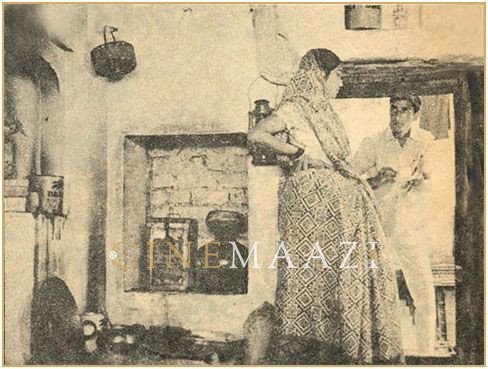
It is very tempting to claim that the Indian woman has finally been ‘liberated' in the 'New Indian Cinema' after centuries of serfdom. In fact nothing of the sort has happened. At most, the fetters have been snapped; she has not been allowed to come into her own—yet.
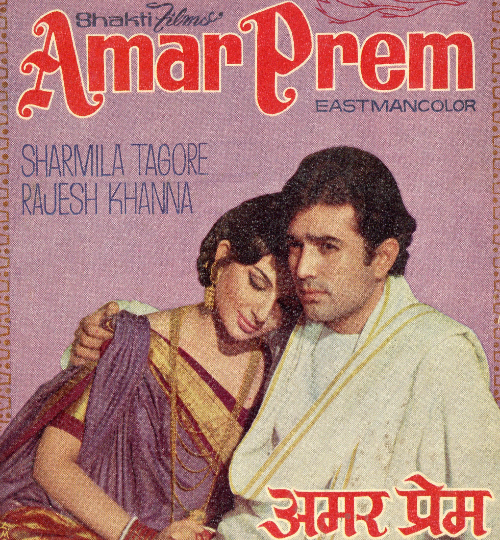
The flamboyant film posters that stare at you from billboards show a woman brash, bosomy and beddable. But the ads are deceptive—see any big budget film and the female characters in them are stereotypes—wife, virgin and whore.
There's the heroine. If she's single, she's always as virtuous as they come; to be protected at all costs from losing her chastity (she can't defend herself).
The married woman is invariably the passive, submissive wife. She's like a mindless animal chained to her domesticity (Satyajit Ray portrays this character too—notably in his "Apu" trilogy—but in his deft hands, she rises above her condition and does not submit to it).
Finally, there is the least frequently recurring role—the whore. She emerges as the personification of evil, on whom all our pent-up frustrations can be spent. She can be lusted after and unlike the other two stereotypes, is characteristically given western accomplishments. She is a cabaret dancer, smokes, wears stockings, lipstick et al.
But into this celluloid world of fantasy comes a whiff of fresh air: the 'New Wave' in Indian Cinema. These are mainly low budget films, most of them sponsored by the Film Finance Corporation. Attempts are being made at last to show women as they really are, not as types.
"Samaskara" (Funeral Rites) by P. Rama Reddy is perhaps the most far out in its total social relevance, and departs considerably from conventional role-assigning. It deals with the head priest of a village clan who is faced with the dilemma of having to decide whether or not to perform the funeral rites of a Brahmin who didn't live like one. Because the Brahmin lived with a woman and was prodigal generally, could he be disposed off according to strict Brahmin rites? While the head priest gropes for a solution, he comes across the dead Brahmin's mistress. In a rush of passion and abandonment, they make love.
This is among the few instances in Indian cinema where sleeping with a woman out of matrimony, is shown as an act which brings solace—and that too involving a devoted priest, the single most orthodox figure in Indian society. The film ends on a very powerful note with the priest, having weighed all the consequences, deciding to cremate the Brahmin's body, thus ending, among other things, the ‘fallen’ woman's distress.
In Basu Chatterji's "Sara Akash" (Clear Skies) we are presented with the agony of a young boy in a small town who is married off by his parents to the girl of their choice, even before he finishes college. He is repelled by the marriage and makes no attempt to communicate with his young bride. The girl for once is educated and, initially anyway, shows signs of resisting her in-laws' attempts to dominate. The tension between the two mounts to an excruciating point: he makes no attempt to even speak to his 'stranger-wife', much less sleep with her.
It is only when the bride goes away for a while that the embittered young man begins to realise that he actually misses her. When she returns he is still unable to bridge the chasm that separates them and their anguish reaches a breaking point. One night she sobs bitterly on the terrace outside their room. Finally there is an all-reconciling embrace.
The film makes the point that 'arranged' marriages need not necessarily pave the way for happiness ever after; in fact they often aren't easily resolved—as is widely accepted in Indian society. For once the traumas are poignantly brought out.
Among the most outspoken of FFC films on the emancipation of woman is Kantilal Rathod's ''Kanku," which centres round the woman of that name. She is widowed early and is doomed to being ostracised for life in her remote village in Gujarat. Rathod attempts to show the woman making a break with convention: she allows herself to be seduced by a bania; when she is pregnant with his child, the village women (unable to bear the community's shame) arrange for her to be married to a local farmer— a radical, if curious, departure from Hindu convention, which bars widows from remarrying.
Finally there is "Swayamvaram" (Marriage of Choice) by Adoor Gopalakrishnan. Here a young couple takes the startling decision to live together unmarried in a Kerala village; they live in extreme poverty. Society, of course, is far from helpful and the man loses his job as a school teacher.
Like many other neighbours, a prostitute too is curious about the couple's status: "I suppose you have one, and I have many men," she jokes. Towards the close, the husband dies of an illness and the film ends meaningfully with the camera· veering from her to the entrance of the house. There is a strong suggestion that she might turn to prostitution in her desperation. Thus are sacred myths about marriage and a woman's "honour" demolished.
With films such as these, the ground has been broken for the reinstatement of women as flesh and blood human beings. But even so, the New Indian Cinema represents no more than a minor departure from the conventional Indian cinema. Even in the New Cinema, the women are seldom the agents of change. For instance in "Samskara'' it is the head priest who ultimately decides to "restore the honour" of the Brahmin's mistress: all she does is to helplessly await his possible return.
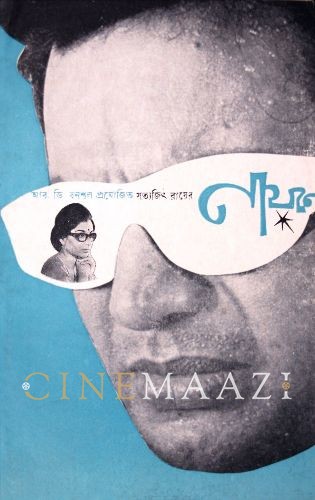
Incidentally, one film which does come to grips with a woman's liberation is Ray's "Mahanagar" where a young orthodox married woman breaks with convention by accepting a job in a city.
Nevertheless, India's new film makers must be given credit for exposing some of society's basic attitudes and prejudices towards women. Now that the issues have been stated for the first time in the cinema, one hopes the attempt will be made to grapple with them strongly in future films.
This article was published in 'Filmfare' magazine's 13 July 1973 edition.
The image and caption are from the orginal article.
About the Author